Healthcare delivery depends on a vast ecosystem of connected medical devices — from infusion pumps and ventilators to imaging systems and patient monitors. These devices are essential for clinical workflows, yet managing them effectively remains a persistent challenge.
Biomedical engineers are tasked with ensuring that equipment is available, safe, and compliant while also optimizing utilization to avoid unnecessary capital expenditures. Historically, answering questions like “Which devices are underutilized?” or “When should we upgrade or retire equipment?” has required manual data collection, fragmented systems, and guesswork.
Forescout eyeFocus changes that dynamic. Biomedical engineers now have a centralized, data-driven way to identify unsafe devices with active recalls, monitor utilization trends, plan maintenance and upgrades, and make informed decisions that improve both operational efficiency and patient safety.
The Challenge: Fragmented Visibility, Utilization Data, and Compliance
Managing medical devices in modern healthcare environments is complex for several reasons.
First, visibility is often fragmented. IT teams may track networked assets, but IoMT devices—such as infusion pumps or imaging systems—often fall outside traditional IT inventories making it hard to identify what’s connected to the network and where.
Second, utilization data is rarely consolidated. Without accurate insights into how frequently devices are used, organizations risk overspending on new equipment or failing to redeploy idle assets to ensure faster service delivery.
Finally, compliance and risk management add another layer of complexity. Biomedical engineers must ensure devices meet regulatory standards while minimizing downtime and avoiding disruptions to patient care.
These challenges lead to inefficiencies: devices sit unused in storage while clinicians request additional equipment, upgrade cycles are reactive rather than strategic, and security vulnerabilities remain unaddressed. The result is higher costs, increased risk, and operational strain.
Actionable Clarity and Depth with Forescout eyeFocus
Forescout eyeFocus addresses these pain points with a suite of capabilities designed specifically for healthcare environments, providing a clear, actionable view of connected medical assets across the enterprise.
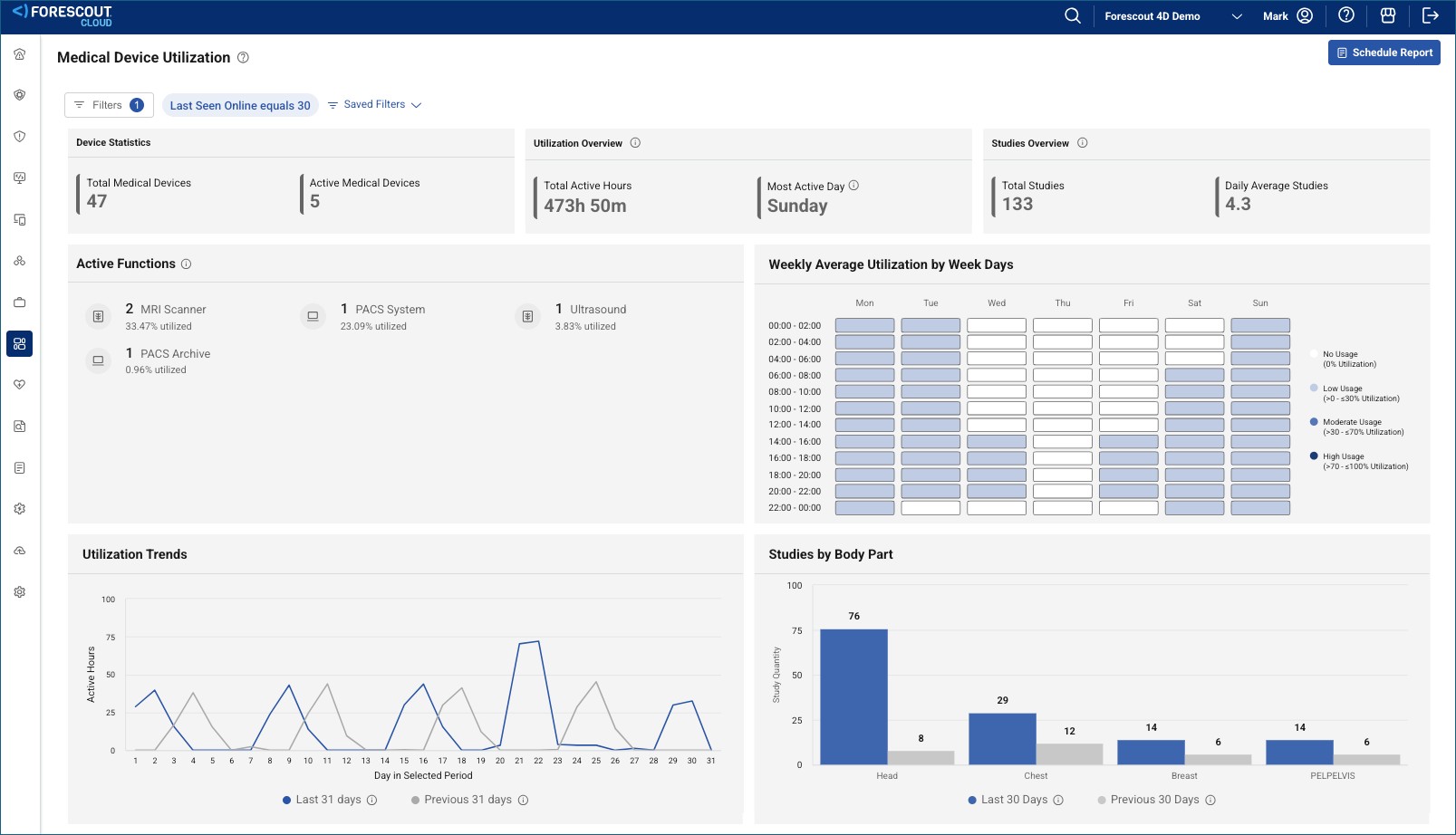
The new Medical Device Utilization Dashboard aggregates usage data by device type, model, and location, enabling biomedical engineers to identify trends and plan optimizations effectively. For example, if infusion pumps in one department show low utilization while another department faces shortages, engineers can redeploy assets rather than purchase new ones. This data-driven approach reduces waste and ensures equipment availability where it matters most. Similarly, biomedical engineers can drill-down into utilization of individual assets to plan maintenance and upgrades without impacting service delivery.
Beyond utilization, Forescout eyeFocus offers granular details about each device, including manufacturer, model, operating system, FDA classification and recalls. This information is critical for planning upgrades, ensuring safe patient treatment, and achieving compliance with frameworks including HIPAA and IEC 62443. Importantly, these insights are agentless which means no disruption to clinical workflows or device performance.
The solution also provides a unified inventory view that consolidates IT, IoT, and IoMT assets into a single pane of glass. Biomedical engineers can see the full picture of their connected environment, making lifecycle planning and risk management far more efficient.
Coupled with risk and compliance insights, Forescout eyeFocus helps prioritize remediation for devices that pose the greatest operational or regulatory risk, ensuring patient safety and organizational resilience.
Benefits for Biomedical Engineers
Instead of relying on anecdotal reports or manual audits, engineers can make data-driven decisions about asset allocation. Underutilized devices can be redeployed to high-demand areas, reducing unnecessary purchases and optimizing capital budgets.
Upgrade planning becomes proactive rather than reactive. By analyzing utilization trends alongside device age and compliance status, engineers can schedule replacements or patch upgrades before failures occur, minimizing downtime and avoiding costly emergency procurements.
Compliance workflows are streamlined as well. Dashboards provide ready-to-use data for audits, reducing the time and effort required to demonstrate adherence to regulatory standards.
Finally, risk reduction is built into the process. With visibility into vulnerabilities and contextual risk scoring, engineers can prioritize fixes without disrupting clinical operations.
Becoming Proactive
By combining visibility, utilization analytics, and risk insights in a single platform, Forescout empowers biomedical engineers to move from reactive firefighting to strategic planning.
As healthcare organizations continue to embrace digital transformation, the ability to manage connected medical devices effectively will become even more critical.
Forescout eyeFocus provides the tools to meet that challenge—helping engineers optimize resources, enhance compliance, and ultimately deliver safer, more efficient patient care.
Explore the new medical device utilization dashboards in Forescout eyeFocus and see how they can transform your approach to lifecycle management. Contact us for a demo or review the latest release notes for release 25.4.