Forescout Research –
Vedere Labs
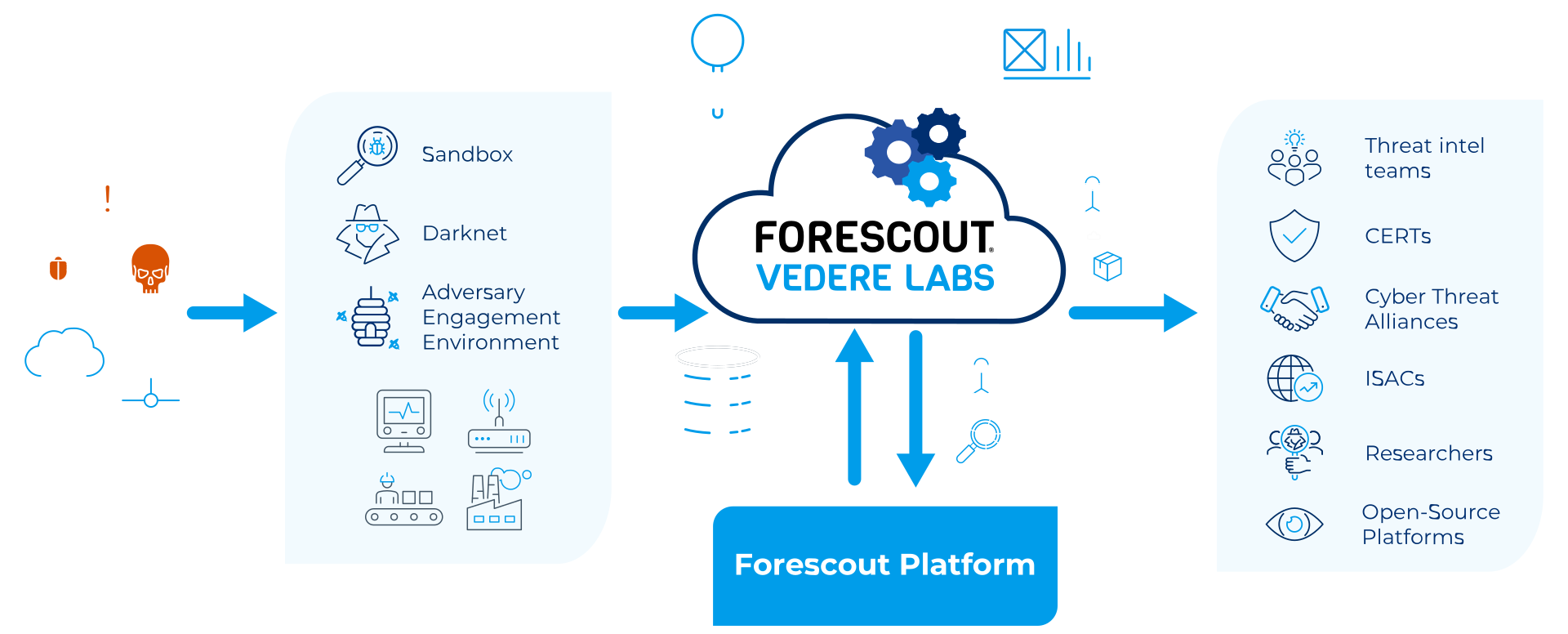
“Vedere” is the Italian word meaning “to see,” which epitomizes the mission of Forescout Vedere Labs, the cybersecurity research arm of Forescout. Our team of global experts focuses on increasing visibility of cybersecurity threats and vulnerabilities for all connected asset types and providing mitigation steps organizations can use to protect themselves.
Our research is fed into the Forescout Platform and shared with the cybersecurity community, including CISA and other cybersecurity agencies, CERTs, ISACs, open-source projects, device manufacturers, universities and other researchers.
What We Do

Vulnerability Research
- Focus on vulnerabilities against managed and unmanaged devices (IT/IoT/IoMT/OT)
- 200+ vulnerabilities discovered in last 5 years
- 100+ known exploited vulnerabilities on unmanaged devices

Threat Reports
- Manual and automatic analysis of malware samples collected via customer telemetry and other sources

Threat Intelligence & Detection
- Daily context-rich, machine-consumable threat feeds
- Detection rules to keep our Threat Detection & Response solution on top of emerging threats
- Live dashboards
How We Do It
Forescout Vedere Labs studies what attackers are working towards by observing actual attacks in our sandboxes, on the Darknet and in our Adversary Engagement Environment. We analyze significant attacks and generate vulnerability and threat intelligence that is consumed by the Forescout Platform. We also create corresponding detection rules that are added to Forescout Threat Detection & Response to help ensure customers can protect their IT, OT, IoT and IoMT environments.
Firsthand Observations in Our Research Laboratory
Located in Eindhoven, Netherlands, our research laboratory is where we observe firsthand the vulnerabilities being exploited and attacks in progress. The information we collect is analyzed to generate threat intelligence, calculate multifactor risk scores and create detection rules.
How Vedere Labs Uses Artificial Intelligence
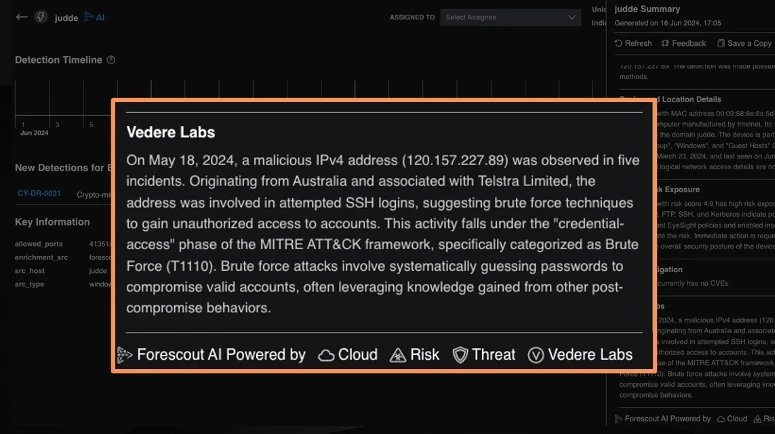
VL threat intelligence is integrated on generative AI products, such as Microsoft Copilot for Security, allowing security analysts to query OT and IoT-specific threat intelligence directly from Forescout Research.
We also have integrated generative AI within our TDR solution, which summarizes proprietary intelligence that can be gathered about IP addresses and other indicators of compromises observed during an incident.
VL KEV: Our Proprietary List of Vulnerabilities
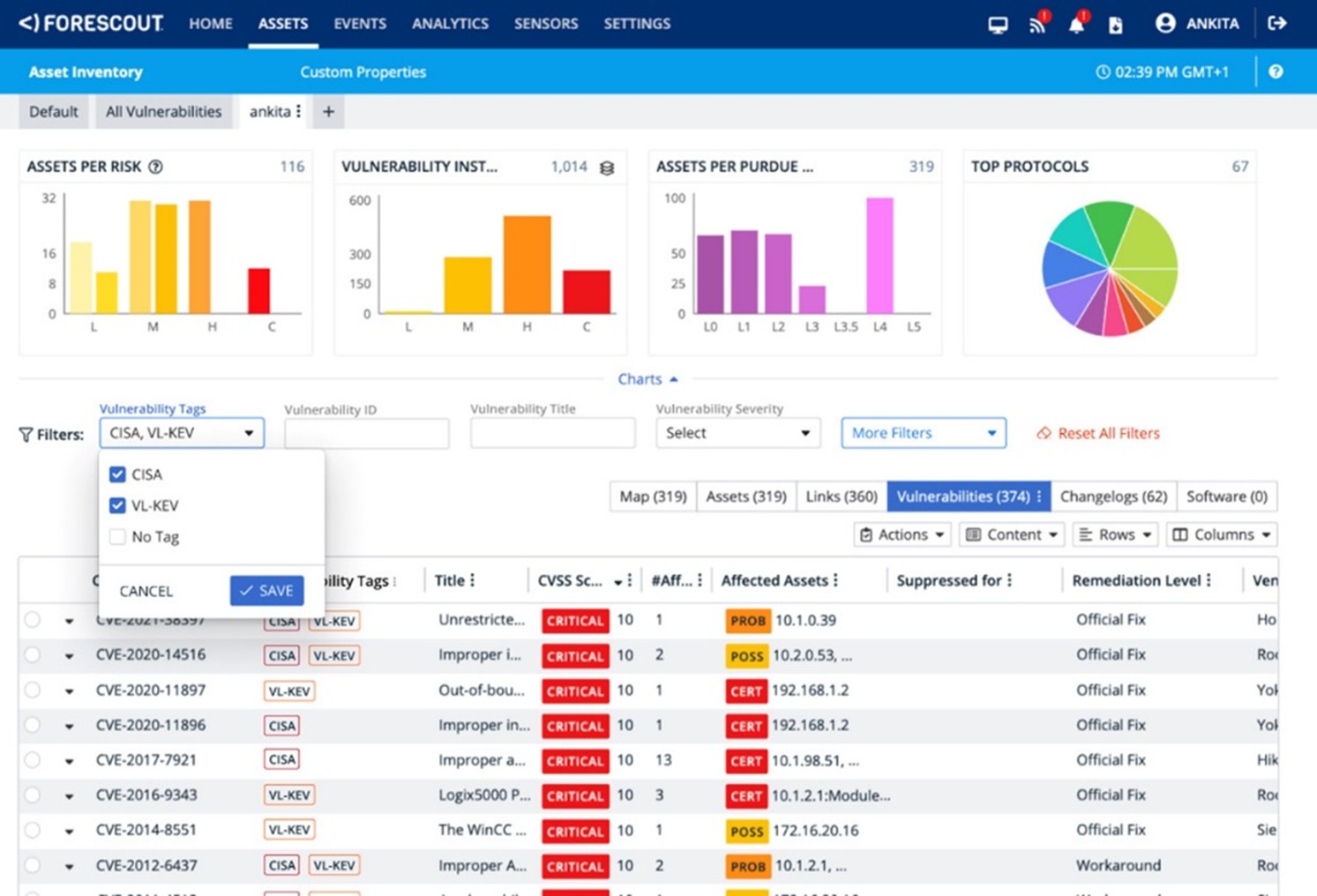
Our KEV list is compiled from real attacks we observe within our OT and IoT-specific honeypots, customer data and third-party intelligence. The list is complementary to industry-standard sources, such as CISA KEV. It is updated in tandem with other threat intelligence for Forescout eyeInspect and REM solutions. This type of intelligence allows users to prioritize vulnerability management actions based on what is currently being exploited by threat actors.
Partnerships and Threat Intelligence Sharing Groups
Vedere Labs is a proud member and contributor to threat intelligence sharing groups, including CERTs, cyber threat alliances and ISACs — where new intelligence and best practices are shared. Member organizations include industry, academia and governments where we share machine-readable intelligence and human-readable reports.
European Energy ISAC
Forescout is a founding member and actively participates in the threat intelligence task force.
ETHOS
Forescout is a founding member and part of the board of directors in this industry partnership dedicated to OT-centric, open-source sharing of anonymous early-warning threat information.
OT-ISAC
Forescout is a partner that shares reports, answers questions about emerging threats and presents at conferences and threat briefing meetings.
CISA JCDC and AIS
Forescout shares indicators of compromise and reports distributed to other members of the JCDC and IAS initiatives.
ACSC CTIS
Forescout shares indicators of compromise and reports distributed to other members of the CTIS initiative.
Data. Lots of Data.
The threat intelligence data we analyze comes from millions of connected devices that we monitor that give us billions of data points about device configuration and network behavior. It also comes from attacks we observe and dissect and other sources that we monitor.

Devices
- 19 million monitored devices
- 39 billion unique data points
- 1,500 global sites
- 6,500+ unique vendors
- 2,300+ unique OS versions

Threats
- 750+ threat actors
- 100+ ransomware group leak sites
- 20+ C2 types monitored on the Internet
- Third-party intel
Forescout Research - Vedere Labs Featured In...

Researchers uncover software flaws leaving medical devices vulnerable to hackers
Researchers say they have found more than a dozen vulnerabilities in software used in medical devices and machinery used in other industries that, if exploited by a hacker, could cause critical equipment such as patient monitors to crash…
Read More
Critical Bugs Expose Hundreds of Thousands of Medical Devices and ATMs
“You can imagine the type of impact an attacker could have when they can either exfiltrate data from medical equipment or other sensitive devices, potentially tamper with lab results, make critical devices unavailable, or take them over entirely…”
Read More
Government cyber workers increasingly concerned hackers will strike during shutdown
The government’s cybersecurity professionals are increasingly concerned that hackers will take advantage of the partial shutdown to tamper with sensitive government data or steal citizens’ information — and that the bare-bones staff won’t be able to fend them off…
Learn More
OT:ICEFALL FINALE
Forescout Vedere Labs is wrapping up its yearlong project looking at design vulnerabilities in operational technology with a closing report today that blames many of the issues they’ve encountered on vendors of the technology not implementing designs that would build security into the systems…
Read More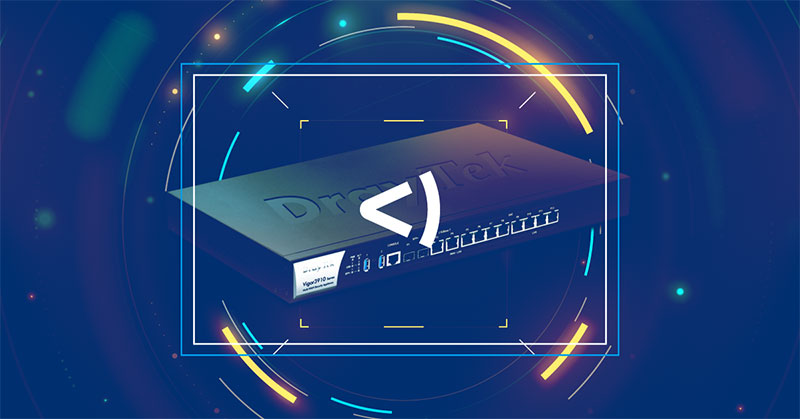
Dray:Break
In 2024, routers are a primary target for cybercriminals and state-sponsored attackers – and are the riskiest device category on networks. We investigated one hardware vendor, DrayTek, with a history of security flaws to help it address its issues and prevent new attacks — especially when ransomware and denial of service attacks are so high today.
Forescout Research. In Your Inbox. Every Month
With 13 cyber attacks every second, it’s hard to keep up.
To help, Vedere Labs now has its own newsletter. Curated by our research leaders, you’ll receive the most crucial information you need to stay ahead of attackers.
It’s loaded with useful context, links and spotlights on threat actors, newly exploited vulnerabilities and other must-know asset intelligence. Once a month. Nice and easy.
Meet Our Leader
Daniel dos Santos
Daniel dos Santos is the Head of Research at Forescout Vedere Labs, where he leads a team of researchers that identifies new vulnerabilities and monitors active threats. He holds a PhD in computer science, has published over 35 peer-reviewed papers, has found or disclosed hundreds of CVEs — and is a frequent speaker at security conferences.

Explore Vedere Labs Blogs
-

What are the riskiest connected devices right now?
By 2028, connected Internet of Things (IoT) devices will expand to over 25 billion. Yet, today’s connected devices are raising the stakes for assessing risk and managing cybersecurity. They have significantly expanded the attack surface creating new challenges and vulnerabilities. The need for accurate, rapid information from systems across every industry is essential for business operations. From […]
Read More -

New NERC CIP standards: Why utilities shouldn’t wait to deploy
On May 9, the North American Electric Reliability Corporation (NERC) officially adopted new Critical Infrastructure Protection (CIP) requirements for Internal Network Security Monitoring (INSM). This is one of the last steps before Federal regulators make it an official standard for utilities and the electrical power grid industry. What does it mean? Compliance for CIP-015-1 is […]
Read More -

Securing the unseen: MITRE’s EMB3D framework for embedded devices
The security of embedded devices is in the news over the last few years, especially IoT assets and OT systems. From connected medical devices to industrial control systems to smartwatches and building automation, connected IoT devices will expand to over 25 billion by 2028. Critical infrastructure is under siege at 13 attacks per every second. The […]
Read More -
Caught in the act: Ransomware attack sticks to our AI-created honeypot
Here is the story of how we caught a ransomware attack in our research honeypot. Ransomware attacks on enterprise organizations lead the news. See Change Healthcare and Ascension. Attackers spend their time on the victim’s network, exfiltrate gigabytes of sensitive data, then lock victim’s systems — and ask for millions of dollars in ransom payment. […]
Read More -

Exposing the exploited: Analyzing vulnerabilities that live in the wild
It’s time to recognize official security vulnerability catalog systems aren’t enough. There are too many gaps in the named security vulnerability process. And plenty of vulnerabilities do not receive the attention they deserve. Some vendors silently patch issues while others leave vulnerabilities in a reserved state. There is not one source of information that contains […]
Read More -
Beyond Bullet Holes: Unveiling Cybersecurity’s Hidden Risk Exposures
The art of risk assessment has long been a crucial element of military strategy and decision-making – and it remains critical to today’s best practices in cybersecurity defense. Abraham Wald, a mathematical genius, played a pivotal role in revolutionizing the understanding of hidden risk and exposure with his innovative work on aircraft survivability. During World […]
Read More -
UK PSTI Act is a milestone for IoT security and passwords
Forescout examines the importance of the UK PSTI Act on IoT device security and the elimination of default password use in IoT products.
Read More -

The cyber threat landscape in Japan – risks, threats and mitigation guidance
In our recent research “Better Safe Than Sorry”, we reported how the number of exposed OT/ICS devices in Japan grew by 372% over the past six years. During this time, several notable cyber-attacks targeted businesses and government entities in Japan. The substantial increase in exposed OT/ICS combined with the recent cyber-attacks in Japan has prompted […]
Read More -
Why Chinese-made IoT devices are growing in the US despite bans
Chinese IoT devices grow in US despite government bans. Forescout researchers discuss the impact on OT security and critical infrastructure
Read More