White Paper
Helathcare Cybersecurity at Machine Speed
Preparing for Frontier AI and Autonomous Agents

Executive Summary
Over the past two decades, healthcare cyber risk has evolved in distinct waves. First, digitization made health systems highly attractive targets because of the value of patient and financial data. Second, ransomware transformed cyberattacks from theft events into operational crises—shutting down systems, delaying treatment, diverting patients, and creating measurable patient safety consequences. Recent peer-reviewed research found that patients already admitted during ransomware incidents experienced measurably higher in-hospital mortality, reinforcing that healthcare cyber events are no longer solely technology issues—they are patient care issues.i Today, the industry is entering a third and potentially more consequential phase: AI-enabled offensive capability at scale.
Frontier AI models and rapidly maturing autonomous agents are compressing the timeline between vulnerability discovery and exploitation from months—or years—to days, hours, or less. Capabilities once reserved for elite threat actors are becoming faster, cheaper, and more broadly accessible. Vulnerability research, exploit development, network reconnaissance, lateral movement planning, and attack orchestration can now be materially accelerated through automation. This represents a structural shift in the economics of cyber offense.
For health systems, the implications are significant. Legacy security operating models—built around periodic scanning, static risk scoring, monthly patch cycles, and manual remediation workflows—were already under pressure. They are increasingly misaligned with digital estates that include thousands of unmanaged or difficult-to-patch medical devices, unsupported legacy systems, vendor-connected technologies, and clinical assets that often cannot be taken offline.
This new operating environment requires a new defensive model. Resilience will increasingly depend on three foundational capabilities:
- Complete visibility — continuous awareness of every network-connected device and system
- Policy-based control — governing access, trust, and segmentation across the environment
- Rapid containment — isolating risk at the network layer before disruption spreads
Organizations that act in anticipation of the third wave of change will strengthen resilience, improve readiness for AI-accelerated threats, and establish a durable operational advantage in continuity, trust, and operational performance.
I. The Frontier AI Inflection Point
Frontier AI models, including recently publicized systems, such as Claude Mythos, along with increasingly capable autonomous agents, are accelerating how vulnerabilities are identified, weaponized, and operationalized. What previously required specialized expertise, time, and coordination can increasingly be assisted or executed through automation within minutes.
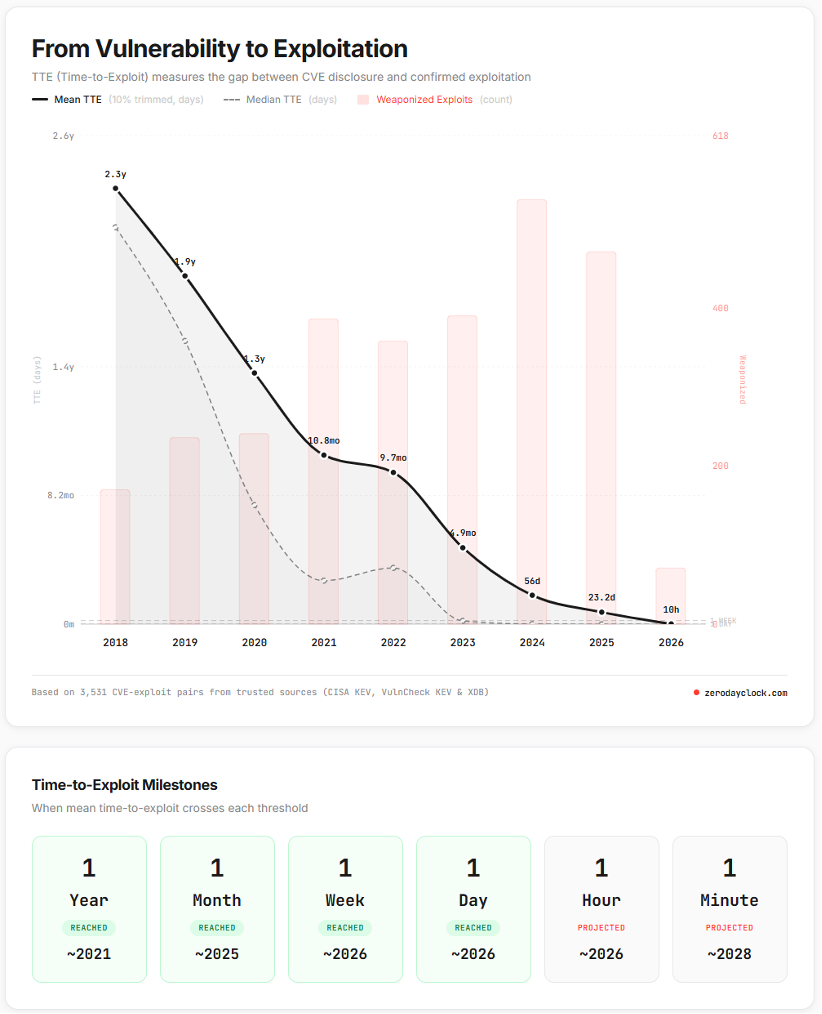
Diagram from the Zero Day Clock (http://zerodayclock.com), by Sergej Epp, demonstrating the collapsing time to exploitation, which is now down to hours.
Unlike previous generations of AI systems, recent frontier AI models have demonstrated capabilities that may represent a meaningful leap forward in offensive AI capability: autonomous exploit generation (producing 181 working exploits where prior models succeeded only twice), complex vulnerability chaining (identifying and combining multiple flaws into cohesive attack paths), and single-prompt autonomy (accomplishing sophisticated attack planning without elaborate human scaffolding).
The Time-to-Exploit (TTE) metric captures this acceleration. TTE measures the gap between CVE disclosure and confirmed exploitation in the wild:
- 2018: 2.3 years average time from disclosure to exploitation
- 2020: 1.3 years
- 2022: 10.8 months
- 2024: 4.9 months
- 2026 (with frontier AI acceleration): timelines compressing toward days, and potentially hours
This is exponential, not linear acceleration. For a health system, this means a vulnerability announced Monday morning may be exploited before a patch is available—and almost certainly before legacy change control processes are complete.
Healthcare is uniquely vulnerable to this acceleration. Unlike enterprises in some other industries, hospitals cannot simply shut down systems for emergency patching. Clinical operations run continuously. Patient care cannot be interrupted. Legacy medical equipment—some still operating on firmware from 2010—may require vendor involvement or regulatory re-validation before updates can be applied.
The challenge is compounded by the ongoing consolidation of the healthcare industry. Mergers, acquisitions, joint ventures, and newly affiliated care networks regularly introduce inherited systems, overlapping technologies, temporary trust relationships, and uneven security controls into already complex environments. As these integration cycles continue, many healthcare networks will remain dynamic and heterogeneous by design. The result, most often, is a network security architecture that impedes threat investigation and response, one that cannot adapt to the speed, scale, and complexity of frontier AI-driven threats.
II. The Rise of Autonomous Agents
Autonomous agents first entered the mainstream security conversation as productivity tools—AI assistants designed to help developers write code faster, help security teams analyze logs, and help researchers better understand exploitable flaws. Their original positioning was fundamentally defensive: tools intended to amplify human capability. That positioning is rapidly becoming outdated. Recent analysis of agent capability evolution suggests a clear trajectory toward more autonomous and operationally capable systems. What began as narrow, task-specific assistants (for example, reviewing a code snippet for security issues) is evolving into multi-step reasoning systems capable of planning, adapting, and executing increasingly complex workflows. More concerningly, some of these capabilities can be applied to offensive use cases with limited human oversight.
What makes autonomous agents significant in a frontier AI context is not mystery or hype, but speed, coordination, and scale. First, they reduce the need for constant human decision-making. Traditional attacks often require manual choices at critical stages: which vulnerability to test, which path is most viable, how to establish persistence, and when to move laterally. Autonomous systems can evaluate many of these options rapidly and continuously. Second, they can chain tasks together. Vulnerability discovery, environmental analysis, exploit development, credential misuse, and lateral movement planning can increasingly be linked into a coordinated workflow. What might take a human operator days or weeks could be materially accelerated through automation. Third, they can operate in parallel. Rather than targeting a single path at a time, autonomous systems can test multiple approaches simultaneously and adapt based on outcomes.
For healthcare organizations, this creates a particularly difficult challenge. Complex hospital networks often contain a mix of modern IT systems, unmanaged clinical devices, legacy platforms, vendor-connected assets, and operational technologies. In many cases, those environments are further complicated by ongoing mergers, acquisitions, and affiliation activity that introduce inherited systems, overlapping architectures, temporary integrations, and uneven security maturity across newly connected entities. Autonomous agents can help adversaries enumerate machines, identify weaker entry points, and move faster than existing response processes were designed to handle. The long-standing defender assumption that ‘we have time to respond’ is becoming less reliable. By the time a human analyst reviews an alert, an attacker may already have expanded access or established persistence. For this reason, healthcare defense strategies must increasingly shift from reactive investigation toward continuous visibility, policy-based control, rapid containment, and automated response.
III. Healthcare Network Architecture: A High-Consequence Target
Few industries operate environments as complex and heterogeneous as healthcare. A typical hospital network may include Windows servers supporting Epic or MEDITECH, thousands of connected medical devices, legacy clinical systems, building automation and HVAC platforms, imaging and laboratory technologies, HL7/DICOM integrations, clinical engineering workstations, guest devices, and temporary contractor equipment. This complexity is rarely the result of deliberate security design. More often, it reflects decades of acquisitions, clinical necessity, regulatory constraints, and the practical need to preserve uptime for patient care.
Healthcare consolidation has added another layer of structural complexity. Mergers, acquisitions, regional affiliations, physician group rollups, and joint operating agreements frequently require organizations to connect previously separate network architectures long before full standardization can occur. The result is often a patchwork of inherited domains, overlapping identity systems, duplicate security tools, inconsistent network segmentation, legacy trust relationships, and temporary connectivity arrangements that can persist far longer than intended. In many health systems, the network is not a static architecture; it is a continuous integration environment shaped by growth, affiliation, and clinical change.
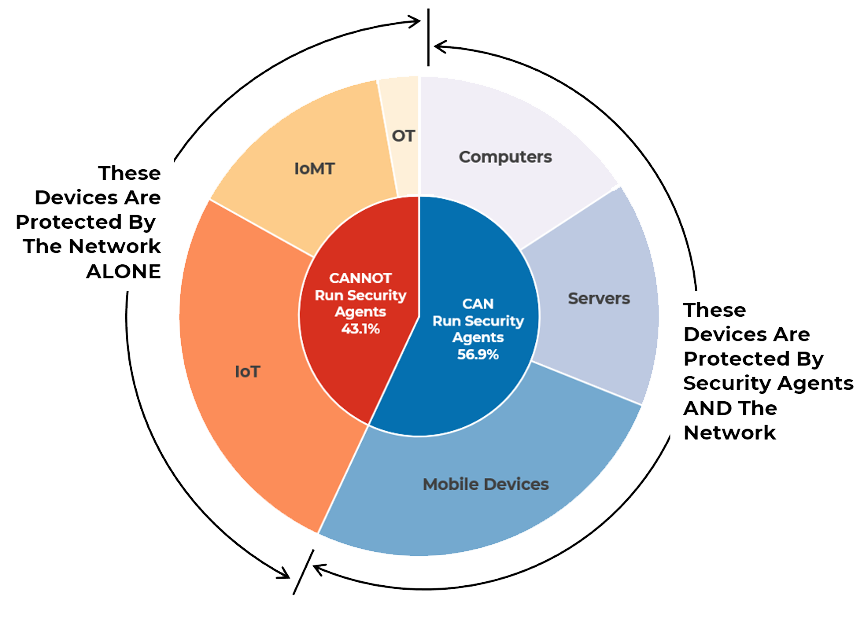
Data from a sample of 557,369 devices (production-connected) from a major Hospital System network, classified broadly for illustration purposes.
Conventional security tools perform reasonably well across managed IT assets. They can assess patch levels, inspect configurations, and monitor standard endpoints. Their effectiveness declines sharply, however, across unmanaged or specialized healthcare environments. Many medical devices cannot run agents, tolerate aggressive scanning, or be patched on normal enterprise timelines. Some rely on embedded operating systems, proprietary protocols, or vendor-controlled support models. As a result, meaningful portions of the hospital attack surface may remain only partially visible to conventional security programs.
This is where frontier AI changes the equation. Advanced offensive tooling can help adversaries enumerate connected devices more comprehensively, identify weak points faster, and prioritize exploitable pathways across both managed and unmanaged systems.
Autonomous agents can continuously map newly connected assets, test inherited trust paths created through M&A activity, correlate exposed services across acquired environments, and identify the shortest route to high-value systems. Frontier AI-enabled exploit chaining can combine multiple moderate weaknesses, misconfigurations, stale credentials, legacy vulnerabilities, flat network segments, or poorly governed vendor access—into cohesive attack paths that a human operator might have taken days or weeks to uncover. Assets previously overlooked because they were obscure, legacy, or difficult to assess may become more accessible targets. Healthcare’s operational constraints further compound the issue: security teams may avoid intrusive scans during patient care hours, while attackers face no such limitations. They can probe, profile, test, and adapt continuously.
The ransomware era has already demonstrated the consequences of architectural weakness. When core clinical platforms such as electronic health record systems are disrupted, impacts can extend beyond IT downtime into delayed treatment, canceled procedures, medication workflow disruption, and prolonged operational recovery that can last days or weeks. Boards increasingly recognize cybersecurity as a patient safety issue, not simply a technology issue.
At its core, the vulnerability is often architectural. In many healthcare environments, an attacker who compromises a workstation, vendor connection, inherited domain trust, or poorly governed device can still move laterally toward more critical systems. Flat networks, excessive trust relationships, inconsistent controls between merged entities, and limited segmentation increase that risk. Government cybersecurity guidance now consistently identifies segmentation and least-privilege architecture as foundational defenses against ransomware and lateral movement. In the frontier AI era, where reconnaissance and attack path discovery will surely accelerate greatly, healthcare resilience will depend less on perimeter assumptions and more on:
- Internal visibility of everything on the network, always
- Policy-based control to govern access, trust, and segmentation across the environment
- Proactive and reactive network segmentation for rapid containment
IV. Five Healthcare-Specific Requirements for Readiness
1. Network-wide Real-time Device Discovery and Device Risk Profiling
Many health systems cannot confidently produce a complete and accurate inventory of everything connected to their networks, which is a challenge repeatedly cited in healthcare cybersecurity guidance and industry research.ii In practice, they often know managed, agented assets such as laptops, mobile phones, and servers, but have limited visibility beyond that core population. Legacy IT inventory platforms are only partially effective across unmanaged medical devices, IoT sensors, building automation systems, OT networks, and legacy equipment—categories repeatedly identified by healthcare regulators and sector guidance as requiring specialized cybersecurity controls.iii
This creates one of healthcare’s most consequential security blind spots. Many specialized devices are not covered by endpoint security tools, and active vulnerability scanners may be avoided because they can disrupt fragile or life-critical systems. As a result, large portions of the environment are scanned infrequently, or not at all. In one large multi-state health system, unmanaged and non-traditional assets represented more than 41% of active connected devices.
These systems may be clinically essential, operationally consequential, or externally connected, yet remain only ‘lightly governed’ from a security perspective. Some are unmanaged, many are unscanned, and others may be only partially known to the security team. In the frontier AI era, where adversaries can use automation to rapidly discover and profile overlooked assets, incomplete visibility becomes more than an operational challenge—it becomes a strategic risk.
You cannot protect what you cannot see. Yet visibility alone is not enough. Seeing every connected device without context—or without the means to remediate material deficiencies—simply creates a different operational problem: more data without better decisions. The objective is not inventory for inventory’s sake. It is complete, continuous, and actionable visibility.
That means a real-time view of the environment—not a quarterly snapshot—including:
- Device attributes: operating system, firmware version, running services, manufacturer, model, ownership and IT/clinical function.
- Device context: utilization, network location, communication patterns, and access to critical systems such as the EHR, imaging platforms, or medication systems.
- Device risk: age, patch levels, unsupported status, inability to run agents, default credentials, or limited management capability.
- Compliance considerations: FDA-related constraints, ePHI exposure, audit requirements, and patient safety implications associated with downtime or disruption.
For healthcare organizations, actionable visibility means more than discovering IP addresses. It means understanding what each device is, why it matters, and how it should be governed. In practice, this can include:
- Infusion pumps, ventilators, and patient monitors identified and classified by device type and firmware version.
- Building automation systems mapped alongside their network dependencies and trust relationships.
- Legacy Windows systems cataloged with support status and patch posture.
- Unknown devices appearing on clinical networks triggering immediate alerts and review workflows.
- A living asset registry that continuously updates and serves as the operational foundation for managing security, risk, compliance, and incident response.
In the frontier AI era, where adversaries can rapidly identify overlooked assets and weak points, this level of visibility becomes foundational. It enables organizations to prioritize what matters most, enforce policy intelligently, and respond faster when risk emerges.
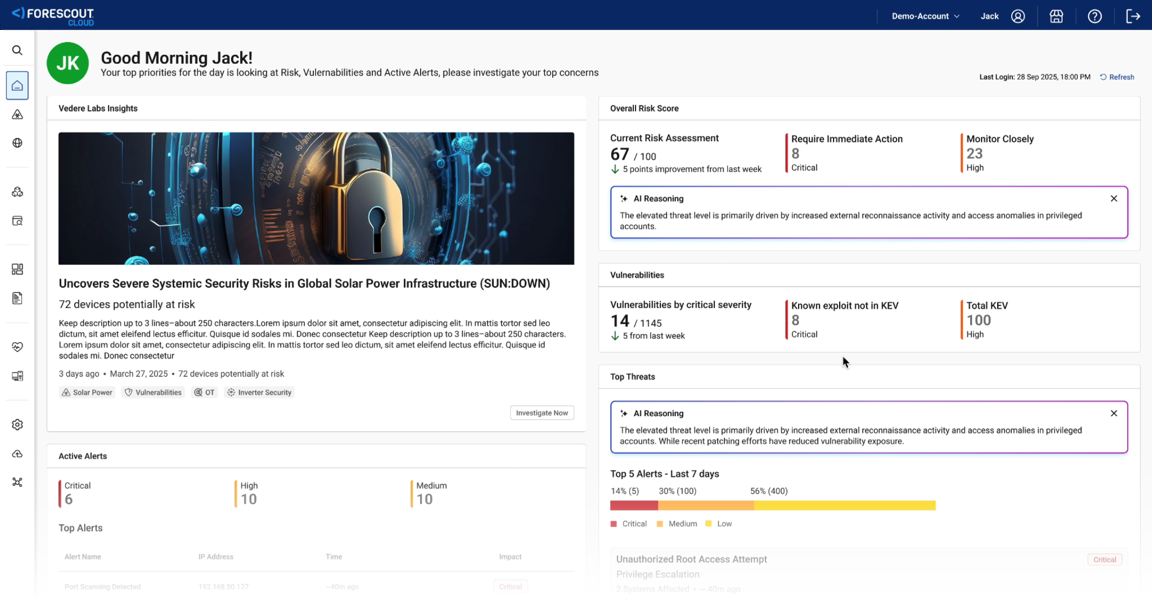
Continuous visibility across all connected assets allows security teams to rapidly identify unmanaged, high-risk, or vulnerable systems requiring immediate action.
2. Real-Time Context-Based Policy Control & Orchestration
Once vulnerabilities are identified, the traditional response is straightforward: patch the affected system. In healthcare, however, remediation is rarely that simple. Many clinical devices require vendor validation or FDA-governed update processes. Legacy systems may no longer have supported patches available. Some assets are actively supporting patient care and cannot be rebooted, taken offline, or modified during normal operations. The result is a persistent class of vulnerabilities that cannot be resolved on enterprise timelines through patching alone.
This creates a material gap in many security programs. Traditional IT workflows are often optimized to discover vulnerabilities, assign severity, and queue remediation. They are less effective when remediation is not immediately possible. Findings may remain in backlog for extended periods, ownership can become unclear, and exposed systems continue operating with little change to their actual risk posture. In healthcare, where many critical assets fall into this category, patch dependency becomes an operational constraint.
For health systems, this should include:
- Device-class-specific policies: infusion pumps, imaging systems, nurse workstations, and administrative endpoints should not be governed identically.
- Explicit communication rules: each device should communicate only with the systems, services, and protocols required for its function.
- Network-level enforcement: policies should be applied without requiring software agents or device-side modifications
- Automated isolation and containment: devices exhibiting unauthorized behavior should trigger immediate protective action.
- Workflow integration: enforcement and response actions should align with incident response, IT operations, and clinical engineering processes.
In practice, this approach shifts the operating model from passive acceptance of unresolved vulnerabilities to active exposure reduction. When patching is delayed, policy enforcement, segmentation, and automated containment become the practical tools that preserve resilience while supporting continuity of care.
In healthcare, this model can be applied through clear, operationally appropriate policy controls. Rather than relying solely on patching or manual intervention, organizations can define how specific classes of devices are expected to behave and enforce those expectations continuously at the network level. For example, an infusion pump may be permitted to communicate only with designated nursing stations, middleware platforms, or EHR gateways using approved protocols and ports. Any attempt to operate outside that profile becomes visible immediately.
Continuous monitoring then validates whether devices remain within approved behavior patterns. If a system begins communicating with unauthorized destinations, initiates unexpected protocols, or attempts connections inconsistent with its clinical purpose, control actions can be triggered automatically. For vulnerable devices that cannot be patched quickly, these policy controls serve as compensating safeguards by limiting what the device can reach—even if the device itself is compromised (and still clinically operational).
For healthcare organizations, policy-based control can create meaningful operational advantages, including:
- Isolation of high-risk devices without interrupting broader clinical operations
- Network-level enforcement that does not require agents or device-side modifications
- Device-class-specific policies aligned to clinical workflows and operational realities
- Automated response actions such as quarantine, access restriction, VLAN reassignment, or enhanced monitoring when policy violations occur
This shifts the security model from passive observation to active governance. Instead of simply knowing a vulnerable device exists, organizations gain the ability to control how it behaves, what it can access, and how quickly risk can be contained. In environments where many systems cannot be traditionally remediated, that capability becomes increasingly important.
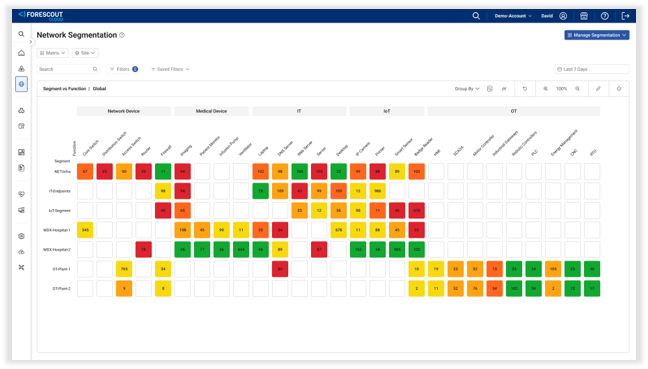
Understanding how systems communicate allows healthcare organizations to design segmentation policies that reduce lateral movement risk without disrupting clinical operations.
3. Automated Containment Without Clinical Disruption
Health systems cannot implement security controls that disrupt patient care. A control that requires a workstation reboot during active treatment may be operationally unacceptable. A control that disconnects a medical device mid-procedure can create direct patient safety risk. In healthcare, security decisions must be effective not only technically, but operationally.
At the same time, traditional incident response processes often depend on human review, escalation, and manual remediation. Those workflows may take hours—or longer—while modern threats can move across networks in minutes. During that delay, attackers may establish persistence, escalate privileges, or move laterally into higher-value clinical systems. The challenge is clear: healthcare needs faster response without introducing clinical disruption.
The objective is automated containment at machine speed, executed in a manner that preserves continuity of care. When a device or workstation exhibits high-risk behavior, organizations should be able to restrict its access, isolate its network communications, or move it into a controlled segment immediately—without waiting for manual approval and without unnecessarily interrupting essential device function.
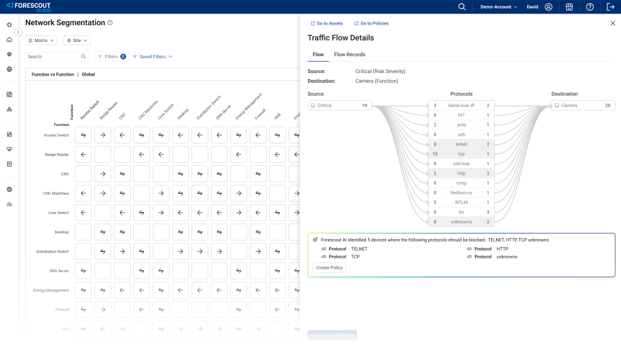
Effective containment requires understanding a device’s dependencies so risk can be isolated quickly without disrupting essential patient care.
For healthcare environments, this can create meaningful resilience outcomes, including:
- Ransomware containment: a compromised workstation can be prevented from reaching the EHR, file shares, or adjacent clinical systems.
- Medical device protection: a breached device can be restricted from serving as a pivot point for lateral movement.
- Operational continuity: security response actions occur while clinical workflows continue with minimal disruption.
- Reduced blast radius: segmentation and automated policy enforcement limit the scope of any single compromise.
This shifts incident response from manual remediation to automated containment. Rather than racing to clean up after an attacker has expanded access, health systems can constrain movement early, preserve critical operations, and buy valuable time for investigation and recovery.
4. Integration with Healthcare Operations & Workflows
Healthcare security cannot be implemented in isolation from clinical operations. A control that appears ideal in theory but disrupts the operating room, delays medication administration, or interferes with bedside care has failed its real-world test. In healthcare, effectiveness is measured not only by risk reduction, but by whether patient care can continue safely and efficiently while controls are applied.
This creates a different operating requirement than in many other industries. Maintenance windows must align with clinical schedules. Policy enforcement must recognize when a workstation is actively supporting a procedure. Device isolation actions must distinguish between a genuine threat and a system currently required for patient care. Security teams and clinical teams must operate as partners, not competing priorities.
The objective is security designed around healthcare workflows and patient outcomes rather than imposed on top of them. Controls should be precise, reversible, and operationally aware. Quarantine actions must be capable of rapid rollback when appropriate. Maintenance and remediation should fit within established downtime windows. Enforcement policies should reflect clinical criticality, location, device type, and time-sensitive operational context.
The result is a more sustainable security model: controls that materially reduce cyber risk without unnecessarily disrupting care delivery. Organizations that achieve this alignment strengthen both resilience and trust—demonstrating that cybersecurity can support the mission of healthcare rather than compete with it.
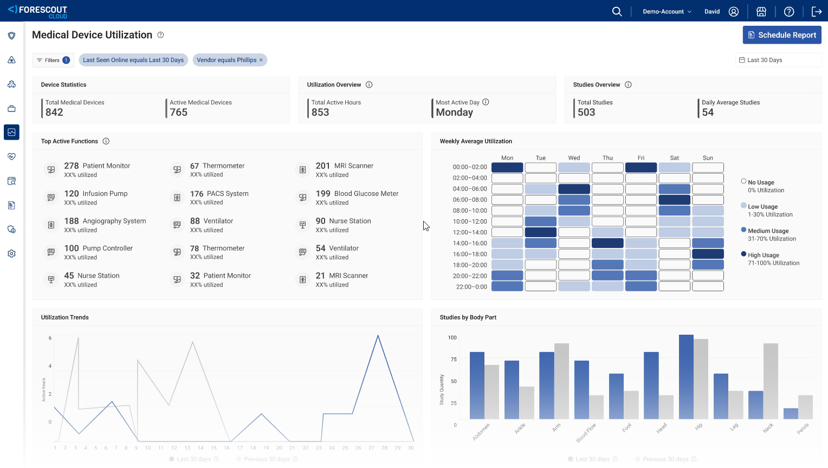
Understanding device utilization patterns helps healthcare organizations schedule remediation and enforcement actions without disrupting clinical operations.
5. Regulatory Compliance, Auditability & Risk Reduction
Health systems (national critical infrastructure) operate under a growing set of regulatory and governance expectations, including HIPAA, HHS cybersecurity guidance and performance initiatives, Joint Commission standards, state privacy and breach requirements, and increasing board oversight of cyber risk. Security incidents are no longer viewed solely as technical failures. They are often evaluated through the lens of governance, accountability, and whether reasonable preventive measures were in place.
When a breach occurs, boards, regulators, legal counsel, and auditors increasingly ask similar questions, reflecting a broader shift in which cybersecurity is now treated as an enterprise governance issue requiring active executive oversightiv:
- Did the organization know the asset existed?
- Was the vulnerability understood? How was the risk prioritized?
- What actions were taken, and how quickly?
- Were decisions reasonable given the operational context?
In healthcare, where many systems are difficult to patch and continuity of care must be preserved, those answers must be both documented and defensible.
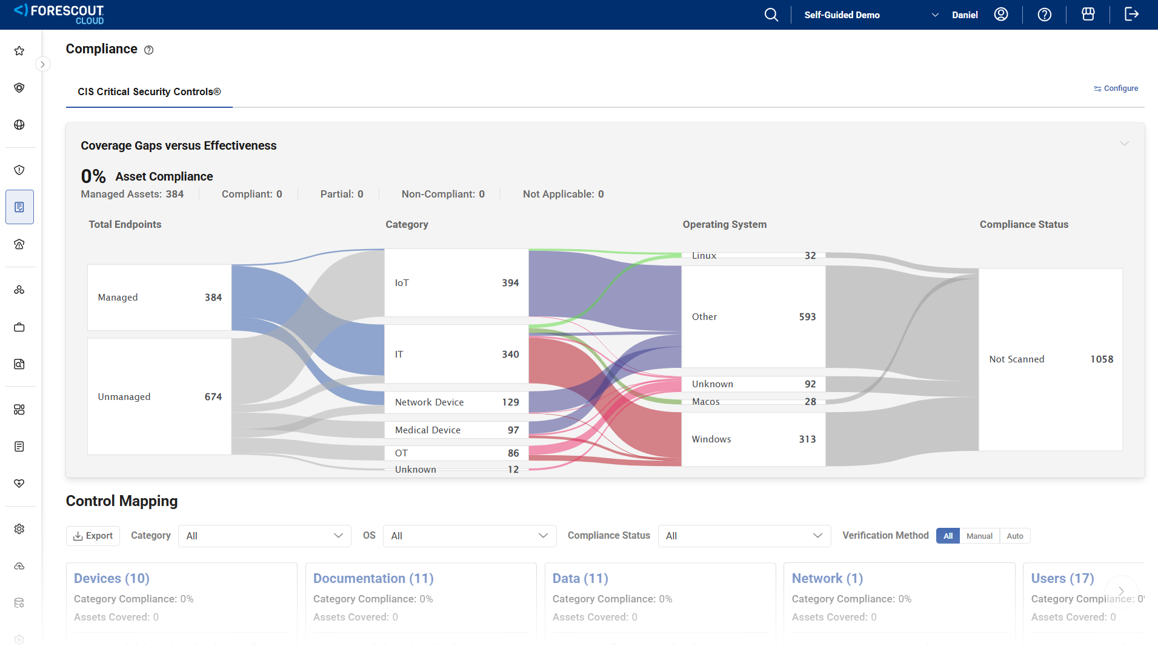
Clear compliance intelligence enables healthcare organizations to identify gaps, prioritize remediation, and demonstrate defensible governance to auditors, regulators, and boards.
The objective is not simply to take security action, it is to make security decisions that are auditable, explainable, and aligned with regulatory expectations. When a device is isolated, access is restricted, or compensating controls are applied, the organization should be able to demonstrate:
- Asset awareness: the device was discovered, identified, and appropriately classified.
- Risk recognition: relevant vulnerabilities or abnormal behavior were detected and assessed.
- Contextual prioritization: risk was evaluated against patient care, operational impact, and business criticality.
- Timely response: mitigation actions were appropriate to the severity and urgency of the issue.
- Measured reduction of exposure: the action meaningfully reduced risk while preserving essential operations.
For regulatory and governance interactions, this type of audit trail helps demonstrate:
- Reasonable vigilance in discovering and managing connected assets
- A structured and defensible method for prioritizing risk
- Timely and proportionate response to emerging threats
- Ongoing improvement in resilience and exposure reduction
For healthcare CISOs and executive leaders, this means greater confidence when engaging regulators, auditors, insurers, and boards. Strong security programs are increasingly defined not only by controls deployed, but by the organization’s ability to prove sound judgment, disciplined execution, and measurable risk management.
V. Conclusion
Healthcare cybersecurity has entered a new operating model. Digitization made healthcare data valuable to attackers. Ransomware exposed the operational consequences of cyber disruption. Frontier AI and autonomous agents now threaten to compress the timeline between exposure and exploitation to a speed many traditional security programs were never designed to match.
For healthcare leaders, the implication is clear: resilience can no longer depend solely on periodic scanning, patch cycles, and reactive incident response. Many critical assets cannot be patched quickly, scanned aggressively, or taken offline without affecting patient care. In this environment, the organizations best positioned for what comes next will be those that establish continuous visibility across all connected assets, apply policy-based control to govern trust and access, and automate containment to reduce blast radius when incidents occur.
This is not simply a security modernization issue. It is an operational continuity, governance, and patient safety imperative. Boards, regulators, and executive teams increasingly expect measurable readiness, defensible decision-making, and evidence that cyber risk is being actively reduced. Organizations that act now can materially strengthen resilience while preserving the clinical mission they exist to serve.
The strategic question is no longer whether frontier AI will reshape cyber risk in healthcare. It is whether existing defenses can adapt before adversaries do.
Five Questions Every Healthcare Leader Should Ask Now
- Can we continuously identify every connected asset across IT, clinical, operational, guest, and third-party environments the moment it appears on our network?
- Which vulnerable systems cannot be patched quickly, and do we have compensating controls that immediately reduce
their exposure? - Can we automatically restrict, segment, or isolate a compromised device without interrupting patient care?
- Do we understand how devices communicate across our environment well enough to stop ransomware or lateral movement before critical systems are reached?
- Can we demonstrate to regulators, insurers, and our board that cyber risk is being continuously identified, prioritized, and reduced?
Organizations that can answer yes to these questions are likely better prepared for the next operating environment than those that cannot. The institutions that act decisively on any gaps will help define the next standard of healthcare cyber resilience.

VI. APPENDIX A – The Core Shift: From Vulnerability Management to Exposure Management
The traditional vulnerability management model was built to optimize volume: find more vulnerabilities, scan more assets, prioritize by CVSS score, and reduce remediation backlogs over time. Even before Frontier AI, that model showed signs of strain. Frontier AI simply makes its structural limitations more apparent.
The challenge is straightforward. Advanced AI systems can accelerate vulnerability discovery far faster than most security teams can realistically triage or remediate. Large codebases, legacy platforms, and complex environments may generate more findings than conventional workflows were designed to absorb. At the same time, not all vulnerabilities represent equal practical risk. A higher-scoring weakness buried in an isolated internal system may have limited real-world exposure, while a lower-scoring issue in a network-facing component with weak authentication may be far more consequential. Severity alone is no longer enough.
The central question has shifted from “How many CVEs do we have?” to “Which exposures can actually be used against us?”. That is the difference between vulnerability management and exposure management.
Exposure management evaluates risk in operational context:
- Is the vulnerable asset reachable from an attacker entry point?
- Is it protected by segmentation or access controls?
- Could it be chained with other weaknesses for privilege escalation or lateral movement?
- What is the likely blast radius if compromised?
- Are compensating controls available if patching cannot happen immediately?
- In healthcare, one additional question becomes essential: Could exploitation of this system affect patient care or patient safety? That lens fundamentally changes prioritization.
An unmanaged medical device running older firmware may present numerous theoretical vulnerabilities yet limited immediate risk if it is properly isolated and unable to reach mission-critical systems. By contrast, a network-facing appliance bridging external and clinical environments may carry moderate CVSS scores but materially higher real-world risk because of its position in the architecture.
This is why exposure management is especially relevant in healthcare environments where many systems cannot be patched quickly, scanned aggressively, or taken offline without consequence. In these cases, visibility, segmentation, policy enforcement, and rapid containment often become the most practical levers for reducing risk.
The Forescout Vistaro™ platform helps operationalize this model by combining continuous asset visibility, contextual awareness across managed and unmanaged systems, vulnerability findings correlated to network reachability, and compensating controls when immediate remediation is not feasible. For health systems, that extends beyond traditional IT to include medical devices, building automation, OT systems, and the many connected assets conventional endpoint-centric tools often miss. The historical question was how many vulnerabilities exist. The modern question is which exposures can realistically be used against us now.
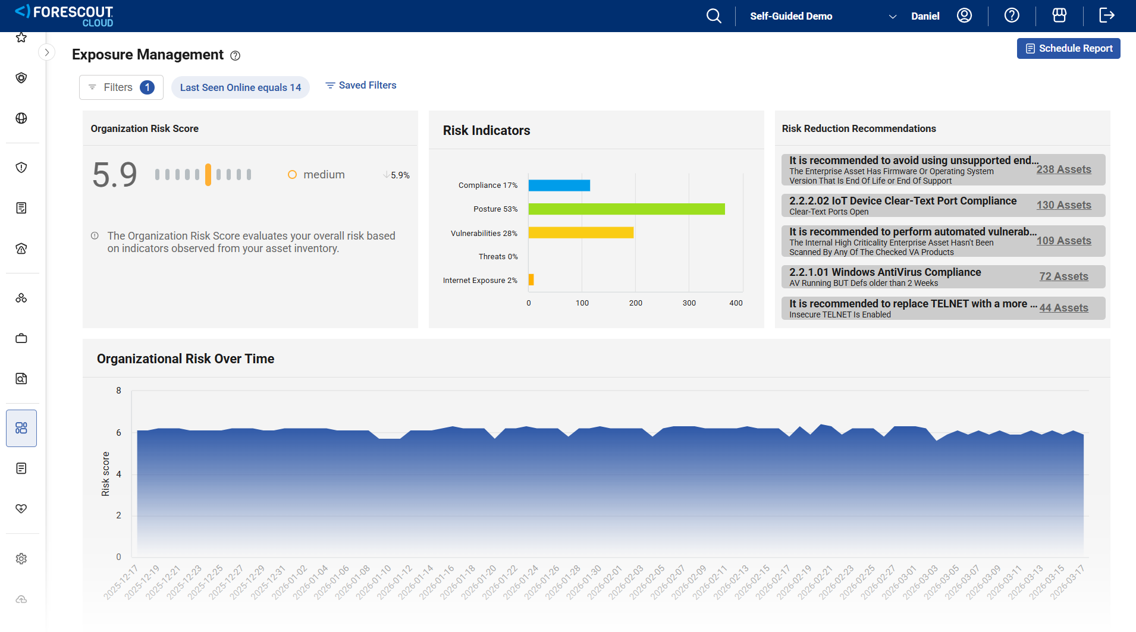
Modern risk prioritization depends on more than severity scores. Exposure intelligence helps organizations focus on the vulnerabilities most likely to be exploited in their specific environment.
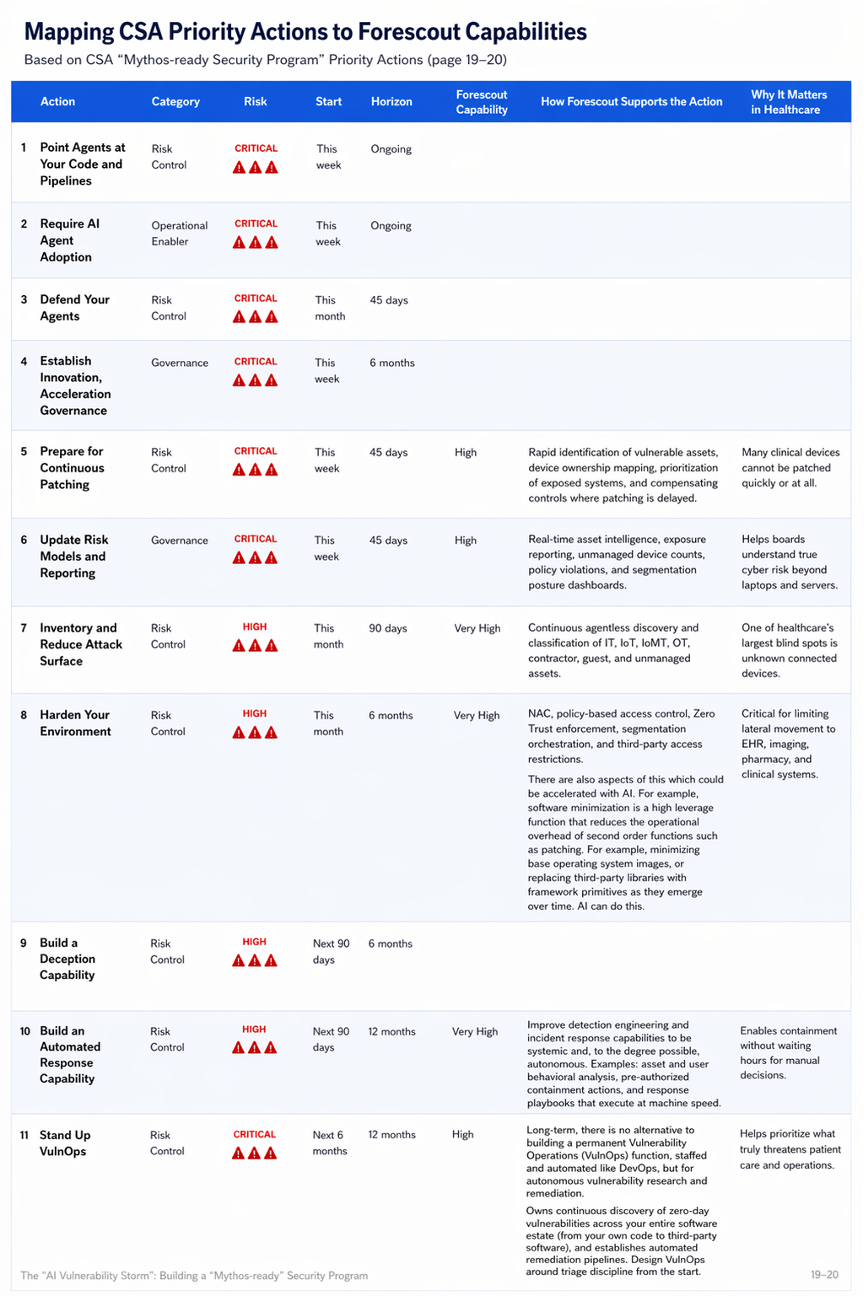
VII. APPENDIX B – Mapping CSA Requirements to Forescout Capabilities
The Cloud Security Alliance (CSA) has produced one of the more practical and credible industry frameworks for understanding how frontier AI may reshape cybersecurity operating requirements. Rather than focusing on headlines or speculative scenarios, CSA translated emerging AI-driven risk into a clear set of priority actions organizations can evaluate and execute now. That is valuable because many leadership teams recognize that the threat environment is changing, but far fewer have converted that awareness into a concrete readiness plan.
The importance of this framework is its emphasis on execution. The CSA priority actions move beyond theory and focus on capabilities that improve resilience in real environments: asset visibility, attack-surface reduction, environment hardening, faster remediation cycles, automated response, and modernized risk operations. These are especially relevant in healthcare, where complex networks, unmanaged medical devices, legacy systems, third-party access, and strict uptime requirements can make traditional security models difficult to sustain.
We include the following mapping to show where Forescout can materially support several of the highest-value actions identified by CSA. Forescout is not positioned as the answer to every requirement, nor should any single platform be. However, many of the most immediate readiness gaps organizations face are network-centric: knowing what is connected, reducing unnecessary exposure, controlling access, and containing compromise quickly. Those are areas where Forescout has established strengths today.
For healthcare organizations in particular, these capabilities can be highly consequential. When large portions of the environment include devices that cannot run agents, cannot be patched quickly, or cannot be taken offline without affecting care, visibility, control, and containment often become the most practical first steps toward frontier AI readiness.
The purpose of this appendix is therefore straightforward: to align an independent industry framework with specific operational capabilities, helping leaders determine where Forescout may accelerate progress as part of a broader security strategy.
References
i Gowrisankaran, G., et al. Hacked to Pieces? The Effects of Ransomware Attacks on Hospitals and Patients. American Economic Journal: Economic Policy, 2026. Findings reported increased in-hospital mortality among patients admitted during ransomware attacks, along with operational disruption impacts. Available via American Economic Association.
ii U.S. Department of Health and Human Services (HHS), Health Sector Cybersecurity Coordination Center (HC3), multiple advisories emphasizing asset inventory, medical device visibility, and legacy system risk as foundational healthcare cybersecurity controls.
iii U.S. Food and Drug Administration (FDA), Cybersecurity in Medical Devices guidance; U.S. Department of Health and Human Services (HHS HC3) advisories regarding legacy medical devices, constrained patching, and visibility challenges in healthcare environments.
iv U.S. Securities and Exchange Commission (SEC). Cybersecurity Risk Management, Strategy, Governance, and Incident Disclosure Rules (2023). Establishes formal expectations for executive and board oversight of cybersecurity risk.